GST Billing for Restaurants in India: Invoices, HSN/SAC Basics and Staying Compliant
Published
GST compliance is one of those things restaurant owners only think hard about when a notice arrives or an auditor asks a question. This is a plain-language starting point, not a substitute for advice from your CA — GST rates, thresholds and rules do change, and you should always confirm the current position for your business before filing anything.
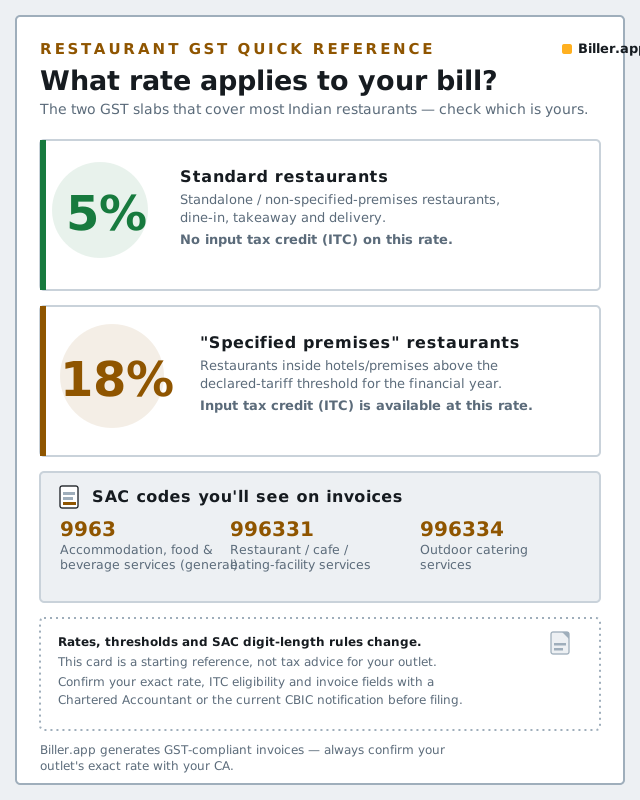
What GST rate applies to a restaurant bill?
As of the rules published in 2026, most standalone restaurants — dine-in, takeaway and delivery, AC or non-AC — are charged GST at 5% without Input Tax Credit (ITC). A restaurant operating inside a hotel classified as "specified premises" under the newer rules is instead charged 18%, with ITC available in that case. Because this distinction (and the underlying rates) can be revised, treat this as a starting reference and verify against the current GST portal guidance or your CA before relying on it.
SAC codes you'll see on a restaurant invoice
CodeCovers 9963Accommodation, food and beverage services (the broad heading) 996331Restaurant services — dine-in, takeaway and delivery 996334Outdoor catering servicesPackaged items you resell as-is (bottled beverages, retail snack packs) are typically classified by HSN code rather than the SAC codes above — if a meaningful share of your revenue is packaged retail rather than prepared food, it's worth confirming the right HSN codes with your CA specifically for those lines.
What a compliant restaurant invoice generally needs
- Your GSTIN, business name and registered address.
- A sequential invoice number and the invoice date.
- Each line item with quantity, rate and taxable value.
- The applicable GST rate and amount, split as CGST + SGST for an intra-state sale (or IGST for inter-state, which is uncommon for dine-in but relevant for some delivery/catering arrangements).
- The SAC code for the service rendered.
The ITC trade-off, in plain terms
The 5% rate is attractive, but it comes with a catch worth understanding: at 5% without ITC, the GST you pay on inputs — vegetables, packaging, gas, rent, even POS software itself — cannot be offset against the GST you collect from customers. Some larger operators deliberately evaluate whether the 18%-with-ITC path works out cheaper for their specific cost structure; for most single-outlet restaurants, the simpler 5% no-ITC path is the norm. This is exactly the kind of decision to make with a CA who can look at your actual numbers, not a generic blog post.
Where billing software actually helps (and where it doesn't)
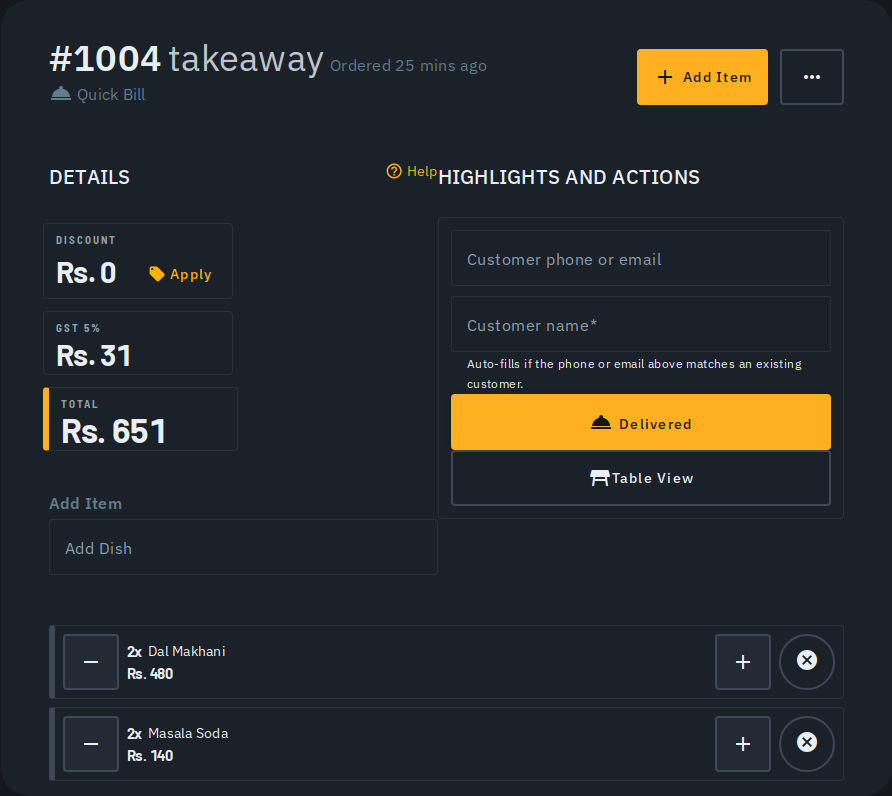
Good POS software should apply the correct GST rate and SAC code automatically on every bill, generate the CGST/SGST split without manual math, and keep a clean, exportable record for filing season. What it can't do is make the underlying tax decisions for you — whether you're even required to register (turnover-based registration thresholds also change and vary by state and business type), how to treat a specific edge case, or how to file your returns. That part stays a conversation with a qualified CA.
Bottom line
Get the mechanical part — correct rate, correct SAC code, clean invoice format, consistent record-keeping — handled automatically by your billing software, and keep a CA in the loop for registration, filing and any edge case. Biller.app applies GST automatically on every bill so this part of running a restaurant stops being a manual spreadsheet exercise.